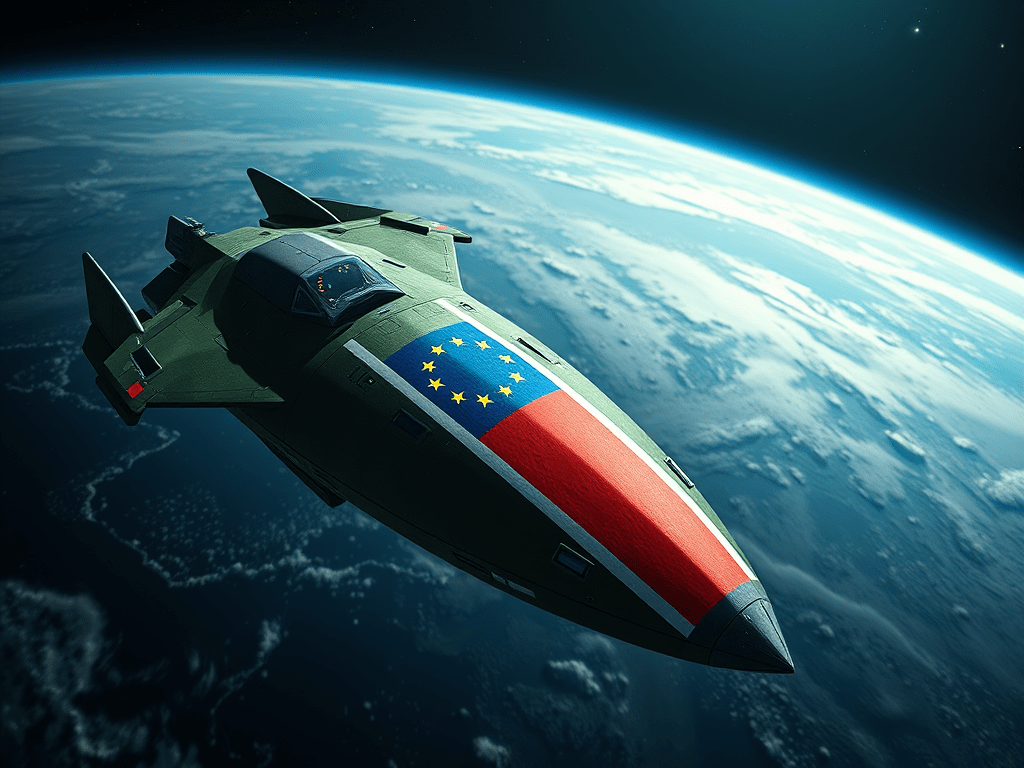
Beyond NATO – A New European-Russian Security Architecture
I. Introduction
Europe stands at a geopolitical crossroads. For over seven decades, the North Atlantic Treaty Organization has served as the cornerstone of European security, binding the continent to American strategic interests and military capabilities. This arrangement, born in the aftermath of World War II and solidified during the Cold War, has outlived its original purpose. As Europe faces evolving security challenges in the 21st century, the question arises whether a fundamentally different approach might better serve European interests.
This essay proposes a bold yet pragmatic vision: replacing NATO with a comprehensive European-Russian security alliance. Such a transformation would reorient European security architecture around continental rather than transatlantic interests, embracing the geographic reality that Russia is and will remain an integral part of the European security landscape. Rather than perpetuating a division that originated in the mid-20th century, a European-Russian alliance could provide a more sustainable, autonomous, and regionally-focused security framework—one designed to address contemporary challenges rather than fight the ghosts of conflicts past.
The following analysis examines the strategic rationale for this realignment, outlines the potential institutional foundations of such an alliance, and directly addresses the significant challenges such a transformation would entail.
II. The Case for Strategic Realignment
The current transatlantic security model, while historically successful at deterring Soviet aggression, imposes significant limitations on European strategic autonomy. NATO’s command structure and decision-making processes remain dominated by American priorities, often leaving European nations as junior partners in their own security affairs. The divergence between American and European strategic priorities has become increasingly apparent, from disagreements over Middle Eastern interventions to varying approaches toward China.
Europe’s security interests in the 21st century center primarily on regional stability, energy security, migration management, and countering terrorism. These challenges require coordination with neighboring powers, including Russia, rather than reliance on a distant ally whose strategic focus has shifted toward the Indo-Pacific. The American security guarantee, while valuable, has also enabled European military dependence and underinvestment—a situation that ultimately undermines European strategic resilience.
The geographic reality cannot be ignored: Russia occupies approximately 40% of the European continent and shares borders with numerous European nations. Any sustainable European security architecture must account for this fundamental fact. The current approach of containment and deterrence perpetuates tension rather than resolving it, creating a self-fulfilling prophecy where Russian actions and Western responses continually escalate.
A continental approach to security could yield significant benefits: reduced military tensions, enhanced energy security, expanded trade opportunities, and the development of a truly European strategic culture. Rather than existing as a theater for competition between external powers, Europe could reclaim agency over its security destiny through direct engagement with all major continental players.
III. Foundations of a New Alliance
A European-Russian security alliance would require innovative institutional design to function effectively. Drawing lessons from both NATO and the European Union, such an alliance could be built around several core principles: balanced representation, graduated integration, functional specialization, and transparent decision-making.
The central decision-making body, perhaps termed the Continental Security Council, would require a sophisticated voting structure that prevents domination by any single power while acknowledging differences in size and capability. A potential model would combine population-weighted voting with geographic representation, requiring supermajorities for significant decisions. This could include a two-tier system where both large and small states must approve major security actions, similar to the EU’s qualified majority voting but with additional safeguards.
Military integration would proceed gradually, beginning with coordination mechanisms rather than immediate command unification. Joint training exercises, standardization protocols, and interoperability frameworks would precede more comprehensive integration. The alliance could establish multinational rapid reaction forces composed of units from multiple member states, ensuring no single nation controls deployment decisions. Specialized military capabilities could be developed cooperatively, allowing smaller nations to contribute according to their strengths rather than attempting to maintain full-spectrum forces.
Collective security guarantees would form the core of the alliance, with explicit protocols detailing response obligations. These would include graduated response options ranging from diplomatic to military measures, with clear thresholds for activation. Importantly, these guarantees would apply equally to all members, eliminating the current situation where some European nations receive less robust security assurances than others.
A robust conflict resolution framework would be essential, particularly given historical tensions. This would include mandated negotiation periods, neutral mediation mechanisms, and binding arbitration for territorial or resource disputes. By institutionalizing conflict resolution, the alliance could prevent disagreements from escalating into security threats.
IV. Economic Dimensions
The economic advantages of a European-Russian alliance would extend far beyond security cooperation. Energy security would be dramatically enhanced through integrated planning and mutual dependencies. Russia’s position as the world’s largest natural gas exporter and a major oil producer complements Europe’s advanced economy and technological capabilities. Formalized energy cooperation would reduce political leverage through supply manipulation and encourage joint infrastructure development.
The combined European-Russian market would represent over 700 million consumers with substantial purchasing power, creating significant new trade opportunities. Reduced security tensions would allow for expanded infrastructure connections, from transportation networks to telecommunications. A gradual harmonization of standards and regulations in specific sectors could facilitate deeper economic integration while respecting different economic systems.
Defense industrial cooperation presents particularly promising possibilities. Russian strengths in certain military technologies could complement European capabilities, potentially creating a more self-sufficient and innovative defense industrial base. Joint development programs for next-generation systems could distribute costs while ensuring no single nation controls critical technologies.
Managing the transition from transatlantic economic dependencies would require careful phasing. Existing supply chains and investment relationships with the United States would need to be maintained while new continental linkages develop. Some economic disruption would be inevitable, but this represents an investment in long-term strategic autonomy rather than a permanent cost.
V. Addressing Key Challenges
The most significant challenge to a European-Russian alliance is addressing concerns about territorial integrity given Russia’s actions in Ukraine and elsewhere. This would require binding territorial guarantees with robust enforcement mechanisms. A possible approach would include a continent-wide recognition of current borders as permanent, coupled with demilitarized zones in contested regions and international monitoring missions. Border changes would be permitted only through mutual agreement with democratic validation through referendums under international supervision.
Balancing power between large and small states would require institutional innovation. Beyond voting structures, this could include regional sub-groupings within the broader alliance, allowing smaller states to coordinate positions and amplify their voices. Guaranteed representation in key institutions and rotating leadership positions would ensure diverse perspectives inform decision-making. Mechanisms to prevent economic coercion, such as alliance-wide investment review procedures and energy diversification requirements, would protect smaller members from undue pressure.
Perhaps the most fundamental challenge involves reconciling different governance models and values. A pragmatic approach would focus on external security cooperation rather than internal governance alignment. The alliance charter could explicitly limit its scope to interstate security matters, leaving domestic arrangements to individual members. Critical human rights standards could be maintained through separate agreements while allowing for different systems to coexist. Over time, increased interaction and cooperation might naturally encourage governance convergence without forcing immediate alignment.
Reconfiguring nuclear deterrence would require significant technical and political negotiations. France’s nuclear capabilities could form the foundation of a European deterrent, potentially supplemented by a carefully negotiated arrangement with Russia. This might include transparency measures, joint decision protocols, and mutual reduction agreements to maintain deterrence at minimum necessary levels. The uncomfortable reality is that European security ultimately depends on European powers taking responsibility for their defense, including its nuclear dimension.
Managing the American relationship during transition would require diplomatic finesse. A phased approach with clear communication of European intentions would be essential. The alliance could maintain cooperation with the United States in areas of mutual interest while gradually assuming primary responsibility for European security. Economic and diplomatic relationships would continue even as security arrangements evolve.
VI. Implementation Roadmap
Implementing such a transformative vision would require a carefully sequenced approach. An initial preparatory phase would focus on rebuilding trust through confidence-building measures such as military transparency initiatives, joint humanitarian operations, and resolution of minor disputes. This would be followed by framework negotiations establishing the alliance’s basic principles and institutional design.
The third phase would involve creating preliminary coordination mechanisms in non-controversial areas like disaster response, counter-terrorism, and maritime security. These would demonstrate the practical benefits of cooperation while building operational relationships. Only after these foundations were established would formal military cooperation begin, starting with limited joint exercises and gradually expanding to more integrated operations.
The full alliance would develop over a decade or more, with clear milestones and evaluation points. This gradualism would allow for course corrections and trust-building through demonstrated actions rather than promises. European NATO members would transition responsibilities incrementally, maintaining dual memberships during an overlap period before completing the shift to the new structure.
Essential diplomatic prerequisites would include resolving or freezing major territorial disputes, establishing clear principles for military deployments, and creating verification mechanisms for arms control agreements. Regional conflicts would need to be addressed through comprehensive peace processes, potentially under the auspices of the developing alliance structures.
VII. Case Studies and Precedents
While this proposal represents a significant departure from current arrangements, history provides relevant precedents. The reconciliation between France and Germany after World War II demonstrates how former adversaries can transform their relationship through institutional cooperation. Despite centuries of conflict, these nations built a partnership that became the foundation of European integration.
The European Union itself offers lessons in creating supranational institutions that respect national sovereignty while enabling deeper cooperation. Its graduated approach to integration, beginning with coal and steel and expanding to broader economic and eventually political coordination, provides a template for security cooperation.
Even during the Cold War, security cooperation occurred across ideological lines. The Helsinki Accords established principles for East-West relations despite fundamental system differences. More recently, cooperation between NATO and Russia on counter-terrorism and nuclear security demonstrates the possibility of effective collaboration in specific domains despite broader disagreements.
VIII. Conclusion
A European-Russian security alliance represents a bold yet pragmatic vision for continental security. By directly engaging with geographic realities rather than perpetuating Cold War divisions, such an arrangement could create a more sustainable security architecture designed for contemporary challenges. The potential benefits—enhanced strategic autonomy, reduced tensions, energy security, and economic opportunities—provide compelling reasons to consider this fundamental realignment.
The challenges are undeniably significant, from reconciling different governance models to rebuilding trust after periods of conflict. Yet these challenges are not insurmountable if approached with institutional creativity, graduated implementation, and a focus on concrete mutual interests rather than ideological conformity.
Europe’s security future ultimately depends on Europeans taking responsibility for their continent. While the transatlantic relationship has provided valuable security benefits, true strategic autonomy requires Europeans to directly address their regional security environment—including the reality that Russia is and will remain a major European power. A European-Russian alliance, properly designed and carefully implemented, could transform an adversarial relationship into a partnership that enhances security for all European peoples.
 Khadim Zaman's Blog